
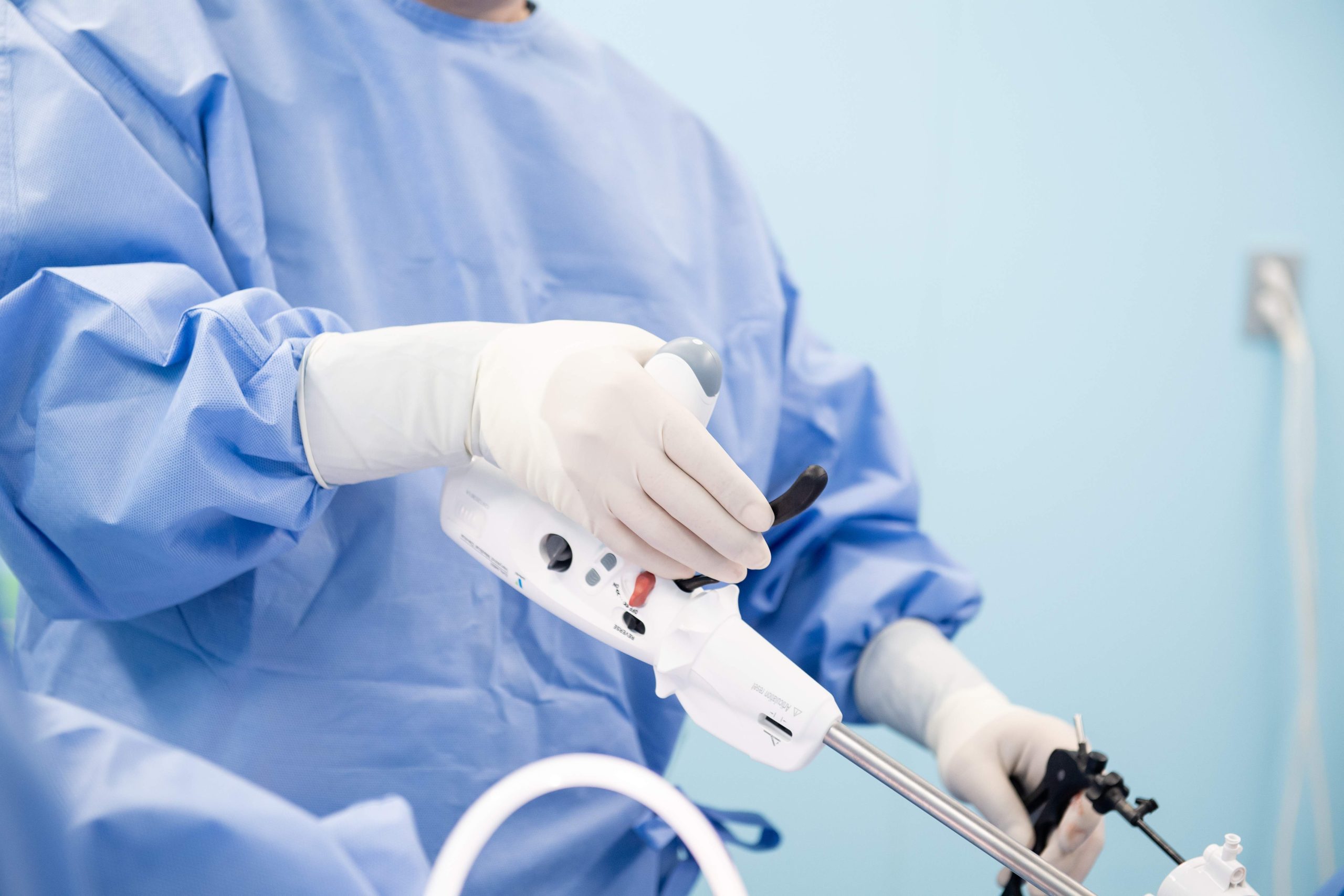
Gallbladder removal, or cholecystectomy, represents one of the most frequently performed abdominal surgeries worldwide. While laparoscopic cholecystectomy has long served as the gold standard for acute and elective gallbladder disease, robotic-assisted surgical platforms have gained substantial momentum. Patients facing gallbladder inflammation, gallstones, or acute cholecystitis often confront a critical question: Does robotic cholecystectomy truly offer superior safety, or is conventional laparoscopy still the definitive benchmark?
A landmark retrospective study analyzing 522,629 emergency and urgent cholecystectomy patients in the United States has introduced powerful evidence to this clinical debate. By evaluating clinical outcomes through rigorous propensity score matching, the study illuminates critical surgical endpoints, including bile duct injury and conversion rates to open surgery. However, translating big data into patient care requires both technical appreciation and healthy scientific skepticism.
1. The Large-Scale Evidence: Bile Duct Injury and Conversion Rates
Bile duct injury (BDI) is among the most feared complications in gallbladder surgery, potentially leading to chronic biliary strictures, recurrent sepsis, and complex reconstructive procedures. Conversion to open laparotomy also brings prolonged recovery, higher post-operative pain, and increased wound complications.
The analysis evaluated over half a million patients undergoing urgent or emergent cholecystectomy, using propensity score matching to balance confounding factors between surgical cohorts:
* 30-Day Bile Duct Injury (BDI) Rate:
* Robotic Cholecystectomy: 0.06%
* Laparoscopic Cholecystectomy: 0.11%
* Conversion to Open Surgery Rate:
* Robotic Cholecystectomy: 0.7%
* Laparoscopic Cholecystectomy: 2.1%
On paper, the robotic approach demonstrated a lower incidence of bile duct complications and an approximately three-fold reduction in conversion to open abdominal incisions during urgent situations.
2. A Critical Clinical Perspective: Real Benefits vs. Methodological Caveats
While these findings highlight the compelling engineering potential of robotic platforms, clinicians and patients must interpret the data within an objective medical framework.
- Small Absolute Risk Difference:
- Although the relative risk of bile duct injury appears halved in the robotic cohort, the absolute risk difference is just 0.05 percentage points (0.06% versus 0.11%). In clinical epidemiology, this means hundreds of surgeries would need to be performed robotically to prevent a single ductal injury.
- Observational Design and Selection Bias:
- Despite meticulous propensity score matching, retrospective observational registries cannot completely eliminate unmeasured confounders. Complex local tissue adhesions, severe gangrenous necrosis, or surgeon specialization can subtly influence whether a case begins with conventional laparoscopy or robotic arms.
- Industry Collaboration:
- The study involved affiliations with robotic surgical system manufacturers. While scientific peer-review safeguards data veracity, industry-sponsored or co-authored investigations necessitate balanced scrutiny rather than unconditional adoption.
- Correlation Does Not Equal Causation:
- The data demonstrates a favorable statistical association, but it does not conclusively prove that robotic mechanics alone eradicate surgical risks. The foundational driver of clinical safety remains the surgeon’s mastery of the “Critical View of Safety” (CVS).
3. Surgical Technology: How Robotic Platforms Enhance the Operative Field
Despite necessary scientific cautions, the technical capabilities of advanced robotic platforms, such as the da Vinci system, provide tangible advantages during acute inflammatory dissection:
- Magnified 3D High-Definition Optics:
- Conventional laparoscopy utilizes a two-dimensional monitor that requires surgeons to rely on indirect depth cues. Robotic systems provide immersive, high-magnification stereoscopic 3D vision, allowing vivid differentiation between the cystic duct, common bile duct, and aberrant vascular structures within Calot’s triangle.
- EndoWrist Articulation:
- Rigid laparoscopic trocars impose the “fulcrum effect,” limiting range of motion. Articulated robotic instruments replicate and exceed the human wrist with 7 degrees of freedom, enabling precise dissection around severely inflamed tissue and dense peritoneal adhesions.
- Tremor Filtration and Ergonomic Stability:
- Microscopic physiological tremors are completely eliminated through robotic hardware algorithms. The surgeon controls camera movements and dual instrument arms from an ergonomic console, reducing physical fatigue during difficult emergency interventions.
4. Advanced Minimally Invasive Gallbladder Surgery in Seoul
In South Korea’s advanced surgical ecosystem, specialized centers utilize cutting-edge single-port platforms to push the boundaries of minimally invasive care. The introduction of the da Vinci SP (Single Port) robotic system allows surgeons to deliver multi-jointed wristed instruments and a 3D flexible camera through a single 2.5-centimeter umbilical incision.
- Single-Incision Cosmetic Excellence:
- Placing the solitary entry portal within the natural depression of the navel ensures minimal visible scarring following full epithelial healing.
- Preservation of Abdominal Wall Integrity:
- Avoiding multiple abdominal punctures reduces postoperative incisional hernia risks, muscle trauma, and systemic somatic pain.
- Rapid Discharge and Functional Recovery:
- Most patients undergoing uncomplicated single-port robotic or advanced laparoscopic cholecystectomy achieve ambulation within hours and return to routine daily routines within several days.
5. The Verdict: Surgeon Expertise Outweighs the Console
Whether performed via standard laparoscopy or cutting-edge robotic consoles, the clinical outcome of cholecystectomy hinges fundamentally on institutional preparedness and surgical volume. A robotic tool in untrained hands cannot replace disciplined anatomy identification, just as a veteran laparoscopic surgeon can achieve near-zero complication rates using conventional equipment.
Patients facing acute abdominal pain or diagnosed with symptomatic cholelithiasis should prioritize surgical centers that operate round-the-clock emergency surgical protocols, comprehensive post-operative monitoring systems, and extensive cumulative case volumes across both laparoscopic and robotic disciplines.
Expert Commentary: Clinical Insights from Min Hospital
Dr. Jong-min Kim from Min Hospital stated, “The recent large-scale American registry data provides valuable reassurance regarding the safety profile of robotic cholecystectomy, demonstrating minimal bile duct compromise and fewer open conversions during acute scenarios. However, medical technology is only as dependable as the clinical foundation behind it. At Min Hospital, having performed more than 12,000 advanced laparoscopic and endoscopic procedures and serving as the first hospital-level institution in Northern Seoul to introduce the da Vinci SP single-port robotic system, we prioritize anatomy-guided safety above all. As a designated medical institution under the Ministry of Health and Welfare’s Emergency Abdominal Surgery Support Project, our 24/7 emergency response infrastructure ensures that whether an acute gallbladder crisis demands state-of-the-art robotic precision or standardized laparoscopic intervention, patient safety and complete recovery remain our absolute standard.”
To learn more about specialized abdominal care, robotic surgery, and emergency surgical capabilities, visit the Min Hospital official website: http://minhospital.co.kr
https://pubmed.ncbi.nlm.nih.gov/42861728/