
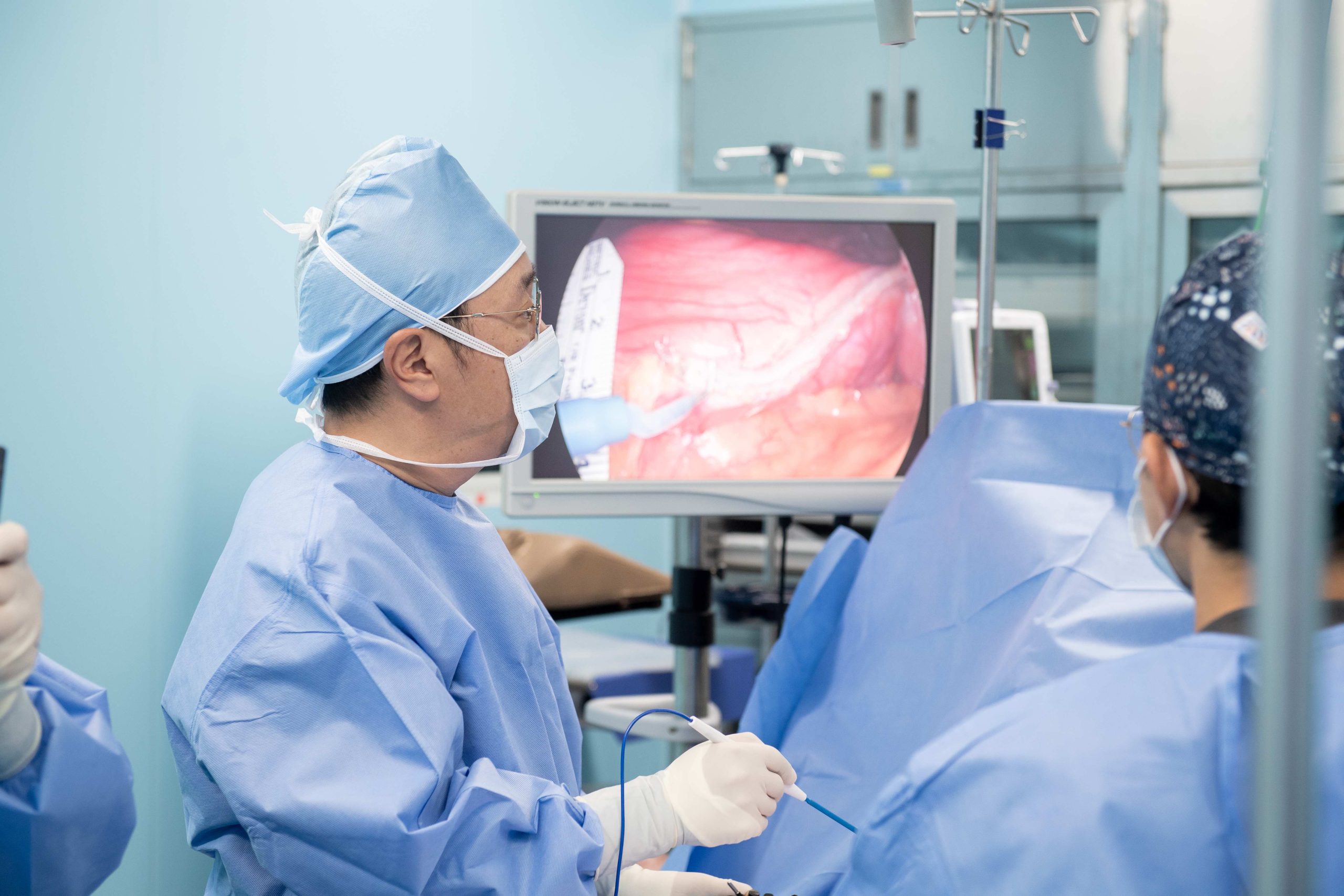
Gallbladder surgery has long been considered one of the standard milestones of modern minimally invasive surgery. However, as advanced robotic platforms become widespread, patients and surgeons face a critical clinical question: Does robotic cholecystectomy provide superior outcomes for everyone, or is it an expensive over-treatment for standard cases?
While commercial medical marketing often promotes robotic assistance as universally superior, recent multicenter clinical data paints a far more nuanced picture. Understanding the clinical threshold where advanced robotic instrumentation genuinely changes outcomes—especially in complex, high-risk cases—is essential for making an informed, cost-effective healthcare decision.
What the Multicenter Data Reveals: The October 3 Cohort Analysis
A significant retrospective cohort study published on October 3 examined 1,828 patients across 8 hospital centers to compare clinical outcomes between conventional laparoscopic cholecystectomy and robotic cholecystectomy.
The findings provide crucial clarity on patient selection:
- High-Risk & High-BMI Patients Saw Clear Clinical Benefits:
- In medically fragile patients, individuals with severe acute inflammation, and patients with elevated Body Mass Index (BMI), robotic surgery was associated with a statistically lower rate of conversion to open surgery.
- High-risk cohorts also experienced reduced post-operative complication rates compared to conventional laparoscopic approaches.
- No Demonstrable Superiority in Routine, Low-Risk Cases:
- For standard, low-risk patients presenting with uncomplicated symptomatic gallstones, robotic cholecystectomy demonstrated no measurable difference in complication rates, recovery velocity, or surgical success compared to high-standard laparoscopy.
- The Cost Disparity:
- The study revealed that robotic cholecystectomy incurred an additional procedural cost averaging approximately $2,200 to $2,400 USD more than standard laparoscopy.
- Methodological Caution:
- Because this investigation was designed as a retrospective cohort study rather than a prospective randomized controlled trial (RCT), it establishes strong clinical associations rather than definitive causality.
The takeaway for patients is straightforward: robotic gallbladder surgery is not a one-size-fits-all upgrade. Instead, it serves as a powerful, precision tool engineered specifically for anatomically complex, high-risk environments.
Why Complex Cases Demand Robotic Precision
In standard gallbladder removal, experienced laparoscopic surgeons can safely isolate the cystic duct and artery within Calot’s triangle. However, in complex cholecystectomy, several anatomical and physiological barriers dramatically elevate surgical risk:
- Severe Fibrosis and Chronic Inflammation: Recurrent cholecystitis fuses delicate biliary structures with surrounding vascular networks, blurring tissue planes and increasing the risk of common bile duct injury.
- Elevated BMI and Deep Visceral Adiposity: In patients with significant abdominal obesity, conventional rigid laparoscopic instruments face restrictive fulcrum effects against the thick abdominal wall, limiting maneuverability and visualization.
- Anatomical Variations and Emergency Presentations: Gangrenous cholecystitis, impacted gallstones at Hartmann’s pouch, or aberrant hepatic ducts require micro-dissection that exceeds the rotational freedom of traditional straight instruments.
Under these challenging conditions, robotic platforms—such as the da Vinci SP (Single Port) system—provide 3D high-definition magnification and multi-jointed wristed instruments that replicate the human wrist inside a confined space. This articulation allows the surgeon to perform delicate dissection around congested vascular structures, significantly mitigating the risk of inadvertent bile duct laceration or emergency conversion to an invasive open incision.
Dedicated Infrastructure: Min Hospital’s Surgical Excellence
Choosing where to undergo complex gallbladder surgery requires looking beyond equipment marketing to evaluate surgical volume, emergency preparedness, and technical infrastructure.
Min Hospital, located in northern Seoul, operates as an advanced surgical specialty center:
- Pioneering Technology in Northern Seoul: Min Hospital was the first hospital-grade medical center in the northern Seoul region to introduce the state-of-the-art da Vinci SP robotic surgical system, providing single-incision access for complex intra-abdominal procedures.
- Unmatched Clinical Volume: With a cumulative record of over 12,000 laparoscopic and endoscopic procedures, more than 1,500 bariatric/metabolic surgeries, and over 5,000 endoscopic thyroid surgeries, the surgical team possesses deep tissue-handling expertise across high-BMI and anatomically distorted surgical fields.
- University-Level Surgical Safety Systems: Operating suites feature specialized laminar airflow, standardized pre-operative cardiopulmonary risk assessments, advanced intraoperative monitoring, and dedicated step-down recovery pathways.
- 24/7/365 Acute Abdomen Emergency Protocol: Selected by the Korean Ministry of Health and Welfare for the pilot support project in surgical emergency abdominal procedures, Min Hospital maintains round-the-clock operating capacity for acute cholecystitis, appendicitis, and strangulated hernias.
Estimated Cost Reference & Clinical Transparency
Medical expenses for gallbladder diagnosis and surgical intervention depend on whether the pathology requires standard laparoscopy or advanced single-port robotic resection, as well as the patient’s underlying health status.
Below is an indicative cost range for international patients seeking surgical care in Korea:
- Initial Diagnostic Workup & Outpatient Consultation:
- Initial specialist consultation: Approx. ₩27,000 (~$20 USD; range: ₩10,000 – ₩50,000)
- Comprehensive abdominal / hepatobiliary ultrasound: Approx. ₩119,000 – ₩150,000 (~$88 – $111 USD)
- Comprehensive pre-operative blood panels & imaging: Approx. ₩250,000 – ₩450,000 (~$185 – $333 USD)
- Surgical Procedure Ranges (Inpatient Package Estimates):
- Standard Laparoscopic Cholecystectomy: Approx. ₩4,500,000 – ₩6,500,000 (~$3,330 – $4,815 USD)
- Complex / Robotic (da Vinci SP) Cholecystectomy: Approx. ₩8,500,000 – ₩12,000,000 (~$6,290 – $8,880 USD)
- Multicenter Study Robotic Cost Variance: Studies note an added device/instrumentation premium of approximately $2,200 – $2,400 USD compared to baseline laparoscopy.
Clinical Cost Disclaimer: The figures presented above reflect average reference estimates for global patients and do not constitute a fixed contractual quote. Total expenditures vary based on patient body mass index (BMI), degree of acute infection or perforation, anesthesia requirements, length of hospital stay, and individual histopathological findings.
Expert Commentary: Insight from the Lead Surgeon
Dr. Jong-min Kim, Medical Director of Min Hospital, emphasized the importance of balanced clinical judgment when approaching advanced gallbladder diseases:
“The primary goal of modern hepatobiliary surgery is not to apply the newest robotic technology to every single patient, but to match the right surgical modality to the patient’s individual anatomical reality. For standard, uncomplicated gallstones, conventional laparoscopy executed with refined technique remains exceptionally safe, reliable, and cost-effective. However, when we encounter complex cholecystitis—marked by severe adhesion, acute gangrenous changes, or high visceral adiposity—the wrist-articulation and high-definition visualization of our da Vinci SP platform can make a decisive clinical difference in preventing bile duct injury and avoiding an open laparotomy. True surgical excellence lies in transparently guiding each patient toward the safest, most tailored pathway for their recovery.”
For international consultations, complex hepatobiliary diagnostics, or second opinions on minimally invasive abdominal surgery, visit the Min Hospital official portal:
Official Website: http://minhospital.co.kr