
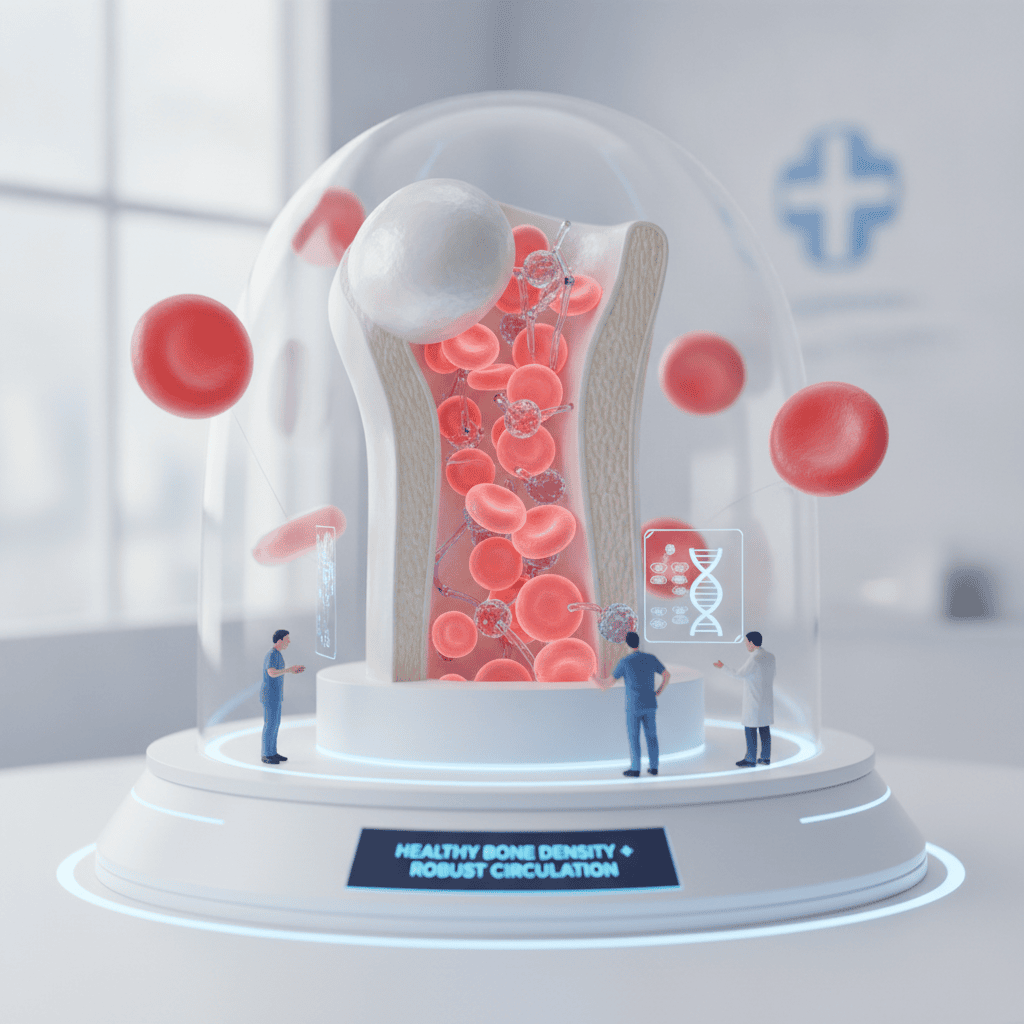
For decades, bone mineral density measured through dual-energy X-ray absorptiometry has served as the gold standard for assessing skeletal fragility. Millions of individuals undergo routine bone density screenings, find comfort in results categorized as normal, and assume their risk of bone injury remains low. However, clinical reality frequently reveals an unsettling paradox: a significant portion of fragility fractures occur in men and women whose bone mineral density falls entirely within the normal or osteopenic range.
Recent medical breakthroughs are reshaping how physicians understand bone fragility. A landmark collaborative study published by researchers from Seoul St. Mary’s Hospital and Stanford University School of Medicine has confirmed that common, readily measurable hematological markers—specifically anemia, elevated red cell distribution width, and elevated mean corpuscular volume—serve as robust, independent indicators of heightened fracture risk, completely independent of traditional bone mineral density scores.
Landmark Evidence: The UK Biobank Investigation
To uncover the subtle relationship between circulating blood parameters and skeletal integrity, the collaborative research team led by Professor Jeonghoon Ha of the Catholic University of Korea Seoul St. Mary’s Hospital and Professor Joy Y. Wu of Stanford University School of Medicine conducted an extensive longitudinal study utilizing data from the UK Biobank.
The scale and methodological rigor of this research provide unprecedented epidemiological insight:
* Massive Study Cohort
* The analysis evaluated 418,959 participants with no prior history of skeletal fractures at baseline.
* Subjects were tracked over a median follow-up period of 13.2 years, capturing real-world clinical progression across diverse demographics.
* Substantial Clinical Outcomes
* During the follow-up period, 16,466 fracture events were formally documented.
* Elevated red cell distribution width and elevated mean corpuscular volume, alongside clinical anemia, correlated strongly with heightened fracture frequency.
* Independence from Bone Mineral Density
* In a detailed sub-cohort analysis of 36,549 individuals with confirmed bone mineral density measurements, the association between hematological abnormalities and fracture risk remained statistically resilient.
* The differences in bone density alone could not explain why individuals with altered red blood cell profiles broke bones more frequently.
These compelling conclusions earned significant international scientific recognition at the American Society for Bone and Mineral Research (ASBMR) 2026 Annual Meeting, where Professor Ha was honored with the Mid-Career Faculty Travel Grant. This built directly upon foundational biological mechanisms outlined in their comprehensive review article, “Complete Blood Count Parameters and Bone Health: Clinical and Experimental Evidence,” published in the international journal Endocrinology and Metabolism (EnM).
The Bone Marrow Microenvironment: Bone Quantity vs. Bone Quality
Why would red blood cell metrics, routinely checked on a standard complete blood count, have any bearing on whether an individual fractures a hip, spine, or wrist? The answer lies inside the bone marrow cavity.
The hematological and skeletal systems do not exist in separate physiological silos. Blood-forming hematopoietic stem cells and bone-forming osteogenic progenitor cells reside in the same specialized niche—the bone marrow microenvironment. These cellular populations engage in continuous biochemical cross-talk:
* Shared Paracrine Regulation
* Signaling molecules, cytokines, and growth factors that regulate red blood cell maturation directly influence osteoclast activation and osteoblast function.
* Chronic low-grade inflammation, oxidative stress, and nutritional imbalances disrupt this microenvironment simultaneously, altering both erythropoiesis and bone remodeling cycles.
* The Diagnostic Gap Between Quantity and Quality
* Bone mineral density measures bone mass—the quantitative mineral content packed into a defined area of tissue.
* Blood profile abnormalities reflect underlying biological disturbances, cellular senescence, and microstructural deterioration—the true qualitative strength and resilience of the bone architecture.
* Subclinical Cellular Senescence
* Variations in red blood cell volume or size heterogeneity often mirror systemic oxidative stress and metabolic aging, factors that weaken bone microarchitecture without drastically changing gross mineral density scores.
The Urgent Need for Early Fracture Prevention
Osteoporotic and fragility fractures are notorious for occurring without advance warning. Unlike cardiovascular or gastrointestinal disorders that present with pain or localized symptoms, bone loss is largely silent until mechanical failure occurs.
The stakes of post-fracture complications are extraordinarily high. Clinical data from Korea underscores the devastating impact of hip fractures:
* One-Year Mortality Rates
* Approximately 21% of male patients die within one year following a major hip fracture.
* Approximately 14% of female patients succumb within the same twelve-month window.
* Long-Term Morbidity
* Surviving patients frequently experience profound functional decline, loss of independence, prolonged bed rest, and increased vulnerability to postoperative thromboembolism and systemic infections.
Because fractures carry such grave outcomes, identifying high-risk individuals before that catastrophic first break takes place is a critical public health objective. Routine screening must expand beyond bone density scans to incorporate full hematological profiles.
A Surgeon’s Perspective: Metabolic and Hematological Vigilance
In surgical and specialized procedural medicine, the interplay between hematological health, nutritional balance, and skeletal strength is evident every day. Conditions such as endocrine disruptions, gastrointestinal malabsorption, and altered metabolic states frequently manifest first as subtle shifts in blood work before escalating into clinical bone disease.
Surgeons evaluating candidates for major abdominal, metabolic, bariatric, or endocrine procedures routinely prioritize complete blood counts not only to minimize intraoperative bleeding risk, but to gauge systemic reserves:
* Nutrient Deficiencies and Cellular Turnover
* Deficiencies in iron, vitamin B12, and folate alter red blood cell morphology while concurrently starving bone tissue of vital cofactors needed for collagen synthesis and matrix mineralization.
* Post-Surgical Metabolic Tracking
* Following advanced bariatric procedures, strict surveillance of micronutrient absorption and blood counts helps prevent secondary bone loss and late-onset fragility.
* Multidisciplinary Surgical Preparation
* Standardized pre-anesthetic testing, comprehensive risk assessment, and long-term metabolic tracking form the bedrock of safe surgical recovery, ensuring that skeletal robustness remains protected throughout healing.
Clinical Recommendations: Protecting Bone Strength
If your recent health screening reveals borderline anemia or unexpected changes in red blood cell indices, proactive steps can safeguard skeletal longevity:
* Re-evaluate Routine Lab Panels
* Do not ignore mild or persistent anemia, elevated red cell distribution width, or elevated mean corpuscular volume, even if bone mineral density scores are reported as normal.
* Discuss with your physician whether these hematological indicators warrant a deeper assessment of metabolic health, nutritional status, and bone turnover markers.
* Prioritize Fall Prevention Strategies
* Maintain physical balance training and home safety modifications to minimize fall hazards, particularly for older adults with known blood abnormalities.
* Address Underlying Systemic Inflammation
* Investigate potential chronic systemic conditions, thyroid dysfunctions, or gastrointestinal absorption issues that may be degrading bone marrow microenvironments quietly.
* Maintain Holistic Nutritional Support
* Ensure adequate intake of calcium, vitamin D, bioavailable proteins, and essential hematinic factors like iron and B-complex vitamins to support both red blood cell synthesis and osteoblast vitality.
https://www.medigatenews.com/news/3689968440